Section 1
Heat & Fire
Saves · Heating
"One fire, kept right, warmed a house all winter on wood you cut yourself."
From the @EzraCage channel
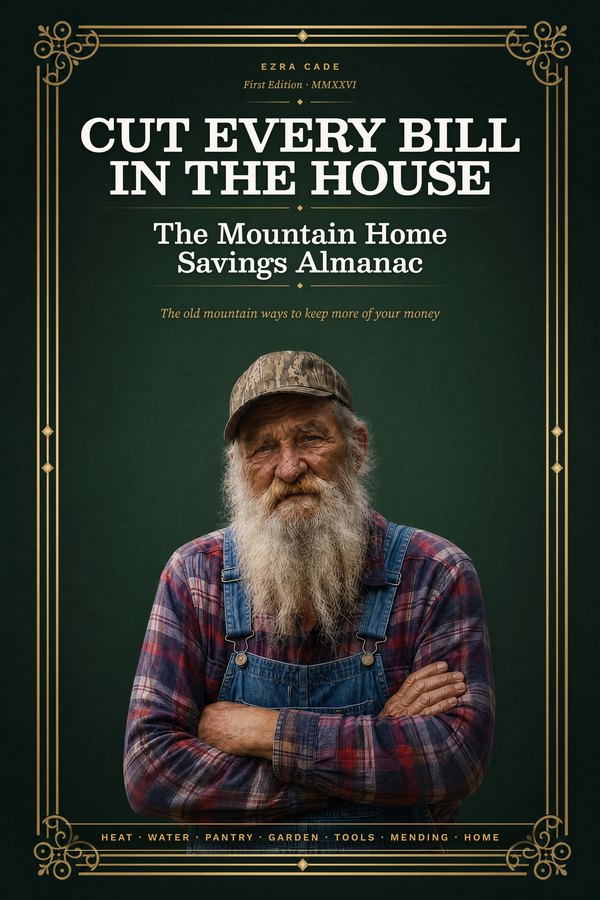
The Mountain Home Savings Almanac — 102 documented ways a mountain family fed itself, heated the house, and fixed instead of bought, back when there was no money for anything else. Every method sourced. Every one you can check. Instant PDF download.
YouTube subscribers
102
Documented methods
14
Sections, woodpile to wash pot
1820s–1930s
Era covered
I. What's Inside
Fourteen sections, from the woodpile to the wash pot — every one built around the same plain question: what did this save them then, and what does it save you now?
Section 1
Saves · Heating
"One fire, kept right, warmed a house all winter on wood you cut yourself."
Section 2
Saves · Cooling, no A/C
"Shade, stone, and a summer kitchen carried a house through August without a fan."
Section 3
Saves · The water bill
"Spring, well, and cistern. Nobody up our holler ever paid for a drink."
Section 4
Saves · Groceries
"Beans and a pone of cornbread fed six for the price of a cup of coffee."
Section 5
Saves · Winter food
"What the garden gave in July, we ate in February — canned, dried, and holed up."
Section 6
Saves · Refrigeration
"The spring house kept milk sweet all summer and never drew a watt."
Section 7
Saves · Produce
"A packet of seed and a hoe put up more food than a paycheck of groceries."
Section 8
Saves · Groceries · with warnings
"The woods set a free table — for them that knew what was safe to take."
Section 9
Saves · Cleaning supplies
"Hog fat and wood ash made every bar of soap the house ever used."
Section 10
Saves · Replacing things
"We fixed it, turned it, or wore it out. Buying new was the last resort."
Section 11
Saves · Tool replacement
"A good tool, kept sharp and re-handled, outlived the man that bought it."
Section 12
Saves · Repairs & heat
"A house sealed against the wind burns half the wood of one that ain't."
Section 13
Saves · Pest control
"Lime, cedar, a good cat, and clean corners — what kept a house before the exterminator."
Section 14
Saves · Told as history
"What grew by the door did for most small complaints — set down here as history, not doctoring."
Every method cites its sources. Field identification of wild plants and fungi requires in-person verification with local experts. Nothing in this book is medical advice.
II. The Arithmetic
A plain comparison. Figures are typical U.S. estimates and will vary by region and household.
We won't put a number in your mouth the way some folks do. Here's the plain truth instead: a single winter of home-canned food, or one repair you'd have paid to replace, can cost more than this whole book — and the book is full of them.
III. A Closer Look
Three sections, up close. Every method follows the same shape: what it was, how it was done with real numbers, what ruins it, and where the record of it survives.
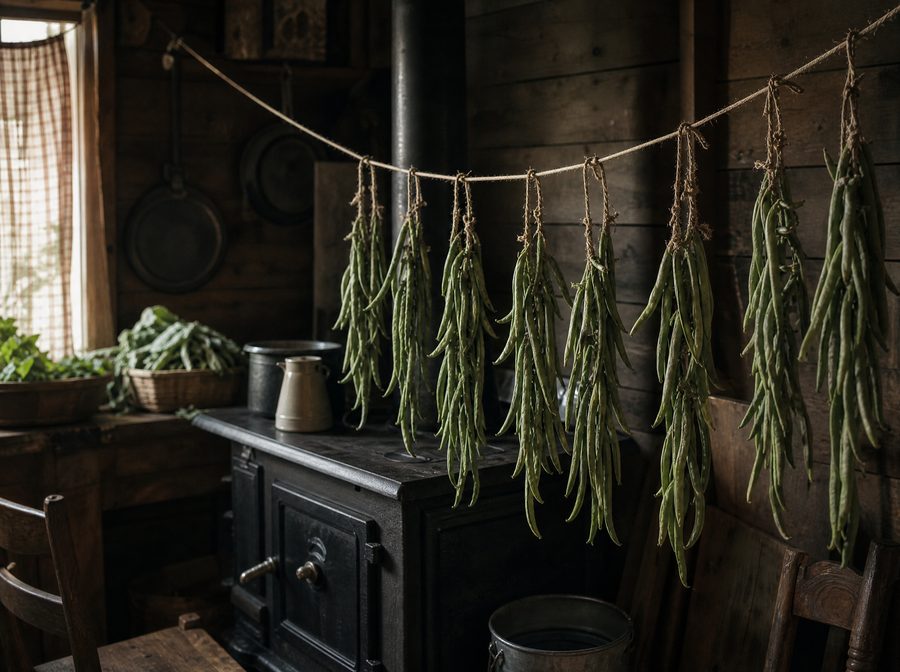
Section 5 · The Winter Supply
Mind yourself: the current food-safety standard is that low-acid foods must be pressure-canned, not open-kettled — the book gives today's USDA guidance beside the old method.
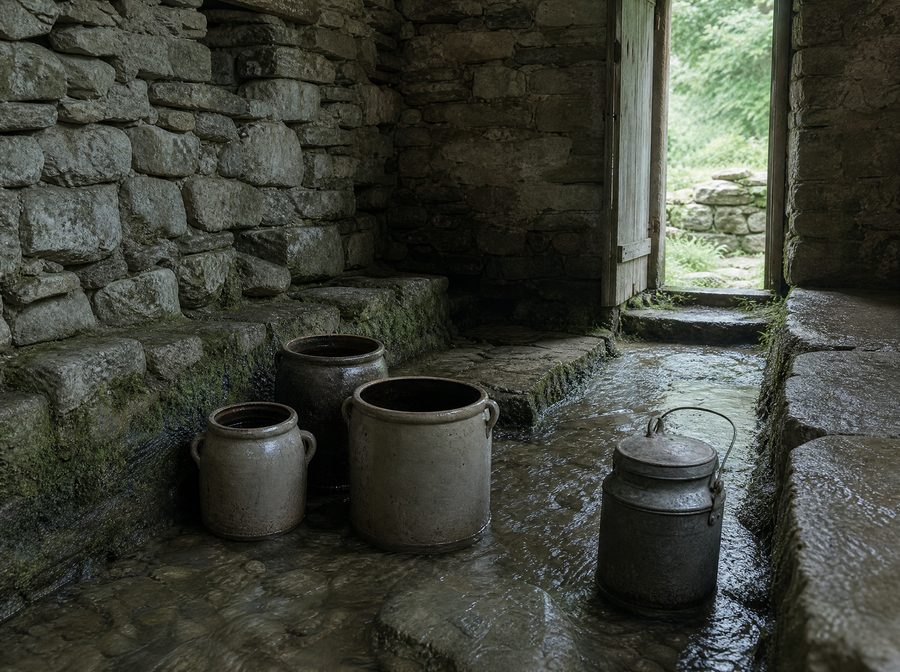
Section 6 · Cold Without Current
The refrigerator is one of the biggest single draws on a house's electric bill. This is how a family did without one.
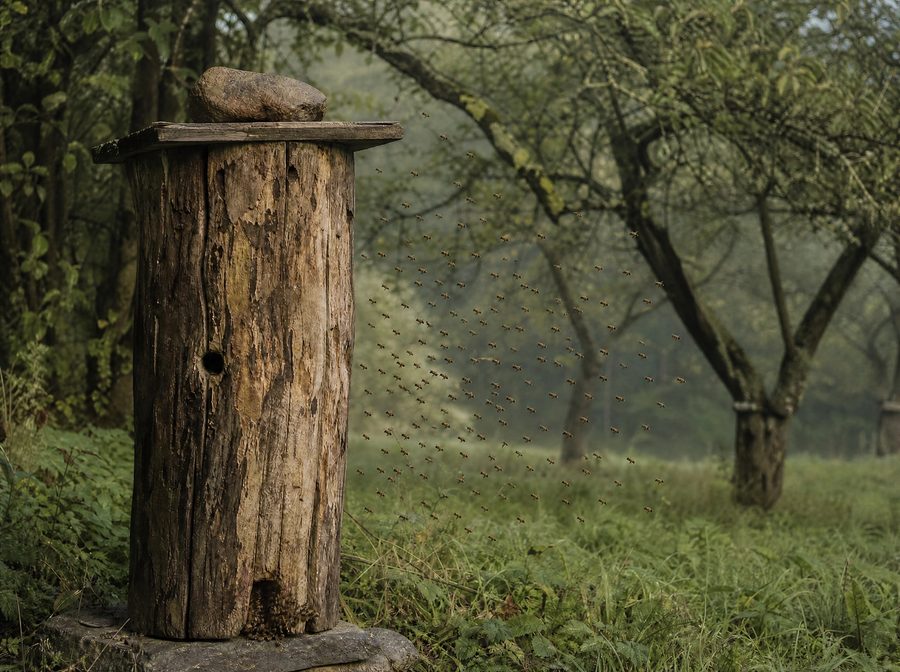
Section 8 · Wild Food & Bees
Mind yourself: field identification of wild plants and fungi requires in-person verification with local experts — no book or photo is enough on its own. Nothing here is medical advice.
From the Channel
This book comes straight off the @EzraCage channel — the same voice, the same sourced-and-checkable habit, now gathered in one place you can keep.
If the channel's been of use to you for free, the Almanac is the whole of it in order — the parts a short video never has room for: the numbers, the failure modes, and the source behind every claim.
IV. Where It Comes From
Very little of this knowledge was published in its own time. It survives at the edges of the record: county extension bulletins that told farm families what agents had learned from them, WPA interviewers who sat on porches in the 1930s writing down what people said, the oral-history projects that sent students up hollers with tape recorders, and family papers — recipe cards, farm ledgers, letters — that stayed in drawers for a century. Every method in this book traces to sources of that kind. Where the record is thin or contested, the entry says so. Where a practice was believed but not borne out, it is presented as history, not instruction.
No named person is invented anywhere in this book. No quote is fabricated. No dollar figure is promised that we can't stand behind. That discipline is slower, and it is the entire point — the back of the book lists every claim and where to check it.
"None of it was wrote down for us. We went and found the people whose grandparents wrote it down for themselves — a ledger here, a recipe card there, an interview some student took fifty year ago. The channel was me telling it. This book is the proof of it. You can check every word, and I'd rather you did." — Ezra Cade
Our Stand
Seven days. If the Almanac isn't what you hoped, send one email and the full price comes back — no questions, no forms, no asterisks. Keep the file either way. We would rather refund a purchase than argue about one.
V. Get the Almanac
One payment. The whole book, plus the tools to put it to work — on every device in the house.
The Mountain Home Savings Almanac
Regular price: $77
$47
First-edition price · one payment · keep forever
Get the Almanac · $47Instant download · One payment · Keep forever
Secure checkout
VI. Before You Buy
Some of it, honestly, depends on your household — where you live, what you already do, how much you take up. So we won't promise you a dollar figure the way some manuals do; we can't stand behind a number we made up. What we will say is plain: the methods are real, documented, and still work, and it takes only one or two of them — a winter's canning, a repair you'd have paid for — to more than cover the price of the book.
Every method traces to a documentable source: county extension bulletins, WPA-era interviews, oral-history projects, and period publications. No named person is invented, no quote is fabricated, and where the record is thin the entry says so. The back of the book is a full source list you can check for yourself — every claim, and the address where the record lives. The telling is Ezra's; the checking is against the public record, and that separation is deliberate.
No. Plenty of it works in a modern kitchen, a workshop, or an apartment — the wash, the mending, keeping food, the from-scratch table. Some needs a yard or a garden, and each method says plainly what it takes, so nothing surprises you after you buy.
Pieces of it, scattered and unverified — and much of it repeated from source to source until the original is lost. What you are paying for is the gathering, the verification, and the order: the whole home in one book, checked against period sources, with the numbers and the failure modes a short video never has room for.
Two files, delivered by download link immediately after purchase: the designed 158-page illustrated PDF, and a reflowable EPUB for phones and e-readers where you control the type size. The First-Weekend Savings Map, the printable Household Savings Ledger, and the full Source List are bound inside both. No app, no account, no subscription.
Yes. The Almanac is formatted to print cleanly on standard letter paper, in full or one method at a time. The Savings Ledger is made to be printed and kept on the counter.
Seven days, full refund, one email — and you keep the file. No forms and no questions.
The Almanac describes historical foraging practice, including wild fungi, with look-alike warnings. Field identification requires in-person verification with local experts — no book or photo is sufficient on its own. Historical remedies are presented as history. Nothing in this book is medical advice, and food-preservation methods are given alongside current food-safety standards.
The Almanac
The Mountain Home Savings Almanac · $47 · 102 methods · Instant download
Get the Almanac7-day money-back promise · Keep the file either way